
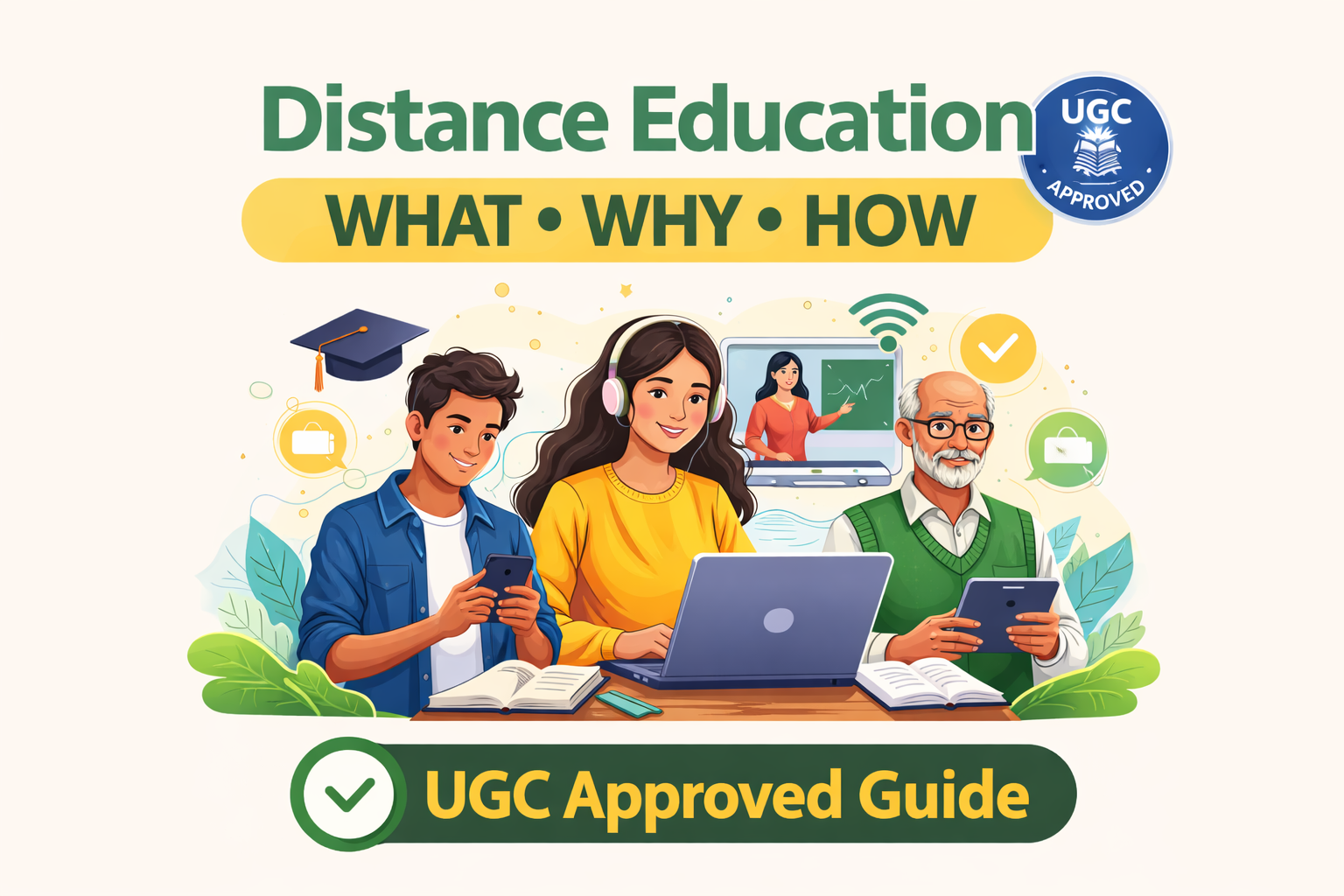
Distance education has become one of the most preferred learning options for students and working professionals in India. With flexible schedules, affordable fees, and recognized degrees, it offers a smart alternative to regular classroom education. If you are planning higher studies but cannot attend daily college, this guide explains Distance Education: What, Why & How – UGC Approved in a simple and complete way.
What is Distance Education?
Distance education is a mode of learning where students study remotely without attending regular physical classes every day. Universities provide study materials, online support, assignments, examinations, and student services through digital or offline methods.
Students can complete:
- Undergraduate degrees
- Postgraduate degrees
- Diploma courses
- Certificate programs
- Professional and skill-based courses
Distance education is ideal for learners who need flexibility while continuing work, family responsibilities, or other commitments.
What is UGC in Distance Education?
UGC stands for the University Grants Commission, the body that regulates higher education standards in India. For distance and online learning, recognition is managed through UGC regulations and approved institutions.
Choosing a UGC-approved distance education university is important because it ensures:
- Valid and recognized degree programs
- Academic quality standards
- Acceptance for jobs and further studies (subject to specific employer/institution rules)
- Transparent admission and examination systems
Always verify current recognition directly on official university or UGC sources before admission.
Why Choose Distance Education?
Distance learning has grown rapidly because it solves real student problems.
1. Flexibility to Study Anytime
You can learn at your own pace and manage studies with work or family life.
2. Affordable Fees
Distance courses are often more economical than regular full-time programs.
3. Continue Working While Studying
Professionals can upgrade qualifications without leaving their jobs.
4. Learn from Anywhere
Students from rural or remote areas can access higher education.
5. Career Growth Opportunities
A recognized degree can help with promotions, skill growth, and new career paths.
How Does Distance Education Work?
Most universities follow a structured process.
Admission Process
Students apply online or offline, submit documents, and pay fees.
Study Materials
Universities provide printed books, PDFs, e-books, and recorded lectures.
Academic Support
Many institutions offer:
- Online classes
- Doubt-solving sessions
- Study centers
- Student portals
Assignments
Internal assignments may be part of evaluation depending on the course.
Examinations
Exams may be center-based, online, or hybrid depending on regulations and university policy.
Degree Awarded
After successful completion, students receive the degree as per university norms.
Popular UGC Approved Distance Education Courses
Many learners choose:
- BA
- BCom
- BBA
- MA
- MCom
- MBA (where permitted and approved)
- Diploma Programs
- Computer Courses
- Education & Management Programs
Always check program-specific approvals.
Who Should Choose Distance Education?
Distance learning is suitable for:
- Working professionals
- Business owners
- Housewives and homemakers
- Students in remote areas
- Learners preparing for competitive exams
- Those seeking a second degree or skill upgrade
How to Choose the Best Distance Education University
Before taking admission, check:
Recognition
Ensure the university and program are approved as required.
Course Relevance
Choose a course aligned with your career goals.
Student Support
Check helplines, portals, classes, and counseling support.
Fee Structure
Compare total costs, installment options, and hidden charges.
Exam Process
Understand exam mode, centers, and timelines.
Common Myths About Distance Education
Myth: Distance Degrees Have No Value
False. Degrees from recognized institutions can be valid and valuable.
Myth: It Is Easier Than Regular Study
Not always. Self-discipline and time management are essential.
Myth: Only Older Students Use It
False. Students of all ages choose flexible education.
Future of Distance Education in India
With digital learning growth and flexible education demand, distance education is expanding quickly. AI tools, mobile learning, hybrid classrooms, and skill certifications are shaping the future.
Conclusion
Distance education is a powerful option for students who need flexibility, affordability, and recognized qualifications. If chosen carefully through a UGC-approved institution, it can open strong academic and career opportunities.
If you cannot attend regular college but still want to build your future, distance education may be the smartest path.
Edward Norton
Lorem ipsum dolor sit amet, consectetur adipisicing elit sed do eiusmod tempor incididunt ut labore et dolore magna aliqua.
Emilie Bryant
Lorem ipsum dolor sit amet, consectetur adipisicing elit sed do eiusmod tempor incididunt ut labore et dolore magna aliqua.
Steve Martin
Lorem ipsum dolor sit amet, consectetur adipisicing elit sed do eiusmod tempor incididunt ut labore et dolore magna aliqua.